How to Get a Job Offshore in 2026: A Step-by-Step Guide
Certifications, CVs, agencies and realistic timelines, written by the team behind thousands of successful offshore applications.
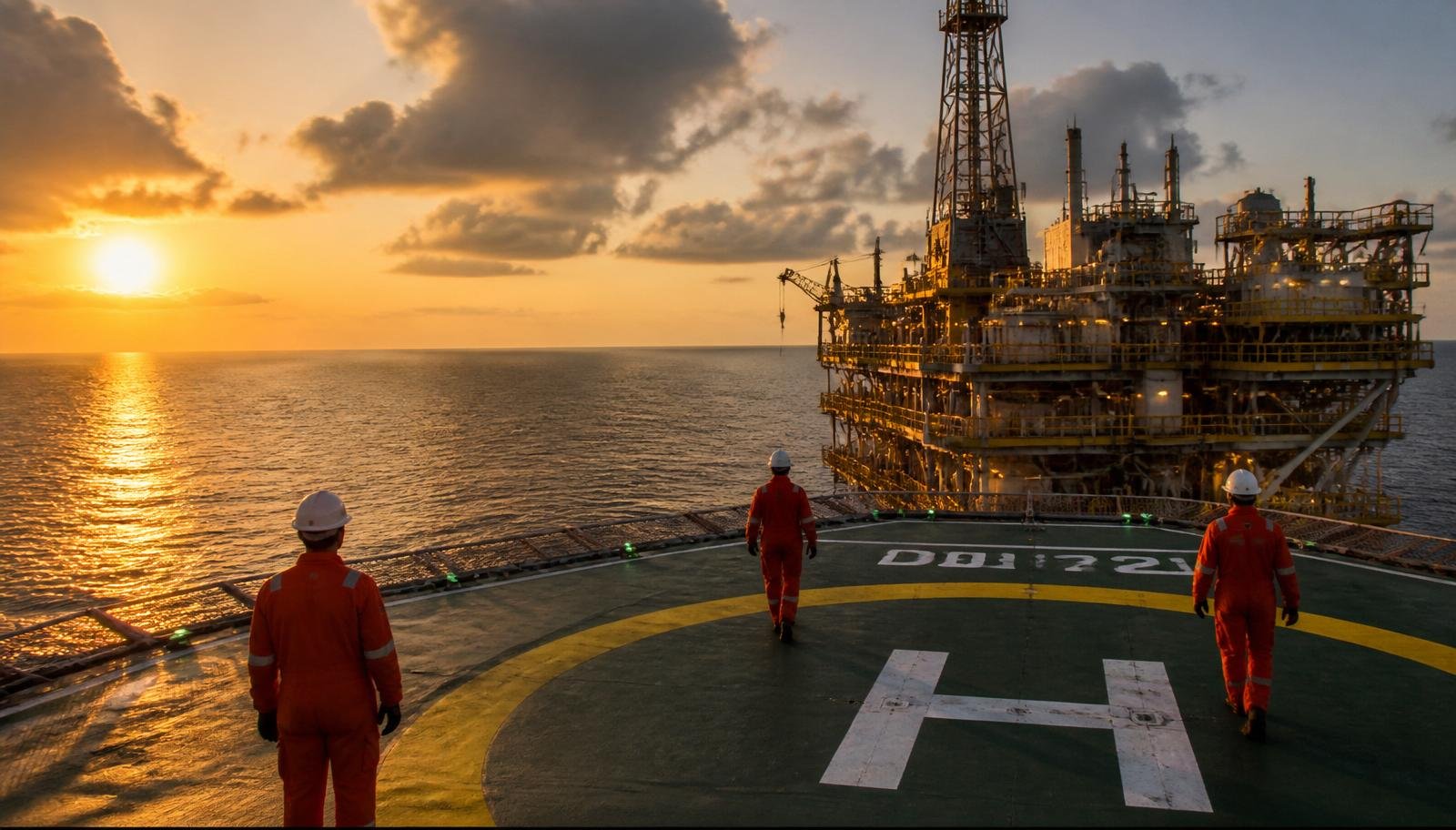
If you have ever watched a helicopter lift off a coastal helipad and wondered how to be on the next one out to a rig, this guide is for you. Getting your first offshore job is not luck. It is a sequence of decisions, and once you know the order, the path becomes obvious.
We write CVs for offshore workers full-time. Over the years we have seen exactly what gets a candidate shortlisted and what gets them ignored. Below is the honest version of how it works in 2026, tailored for the UK and North Sea market but equally useful for anyone chasing rotations in West Africa, the Middle East or Australia.
What kind of jobs actually exist offshore?
Before you start applying, it helps to know what you are applying for. An offshore platform or drillship is a small floating town. It needs almost every skilled trade you can name, plus a handful you have probably never heard of.
Deckhands, ABs, bosuns, crane operators, dynamic positioning officers.
Roustabouts, roughnecks, derrickmen, drillers, toolpushers.
Scaffolders, riggers, welders, mechanical, electrical and instrument techs.
Stewards, cooks, medics, radio operators, HSE advisors, camp bosses.
The easiest way in is nearly always through the entry-level positions, roustabout, scaffolder mate, steward or catering assistant. From there, the internal ladder is usually shorter than people expect, because operators strongly prefer to promote people who already understand rig life.
Step 1: Get the safety certificates first
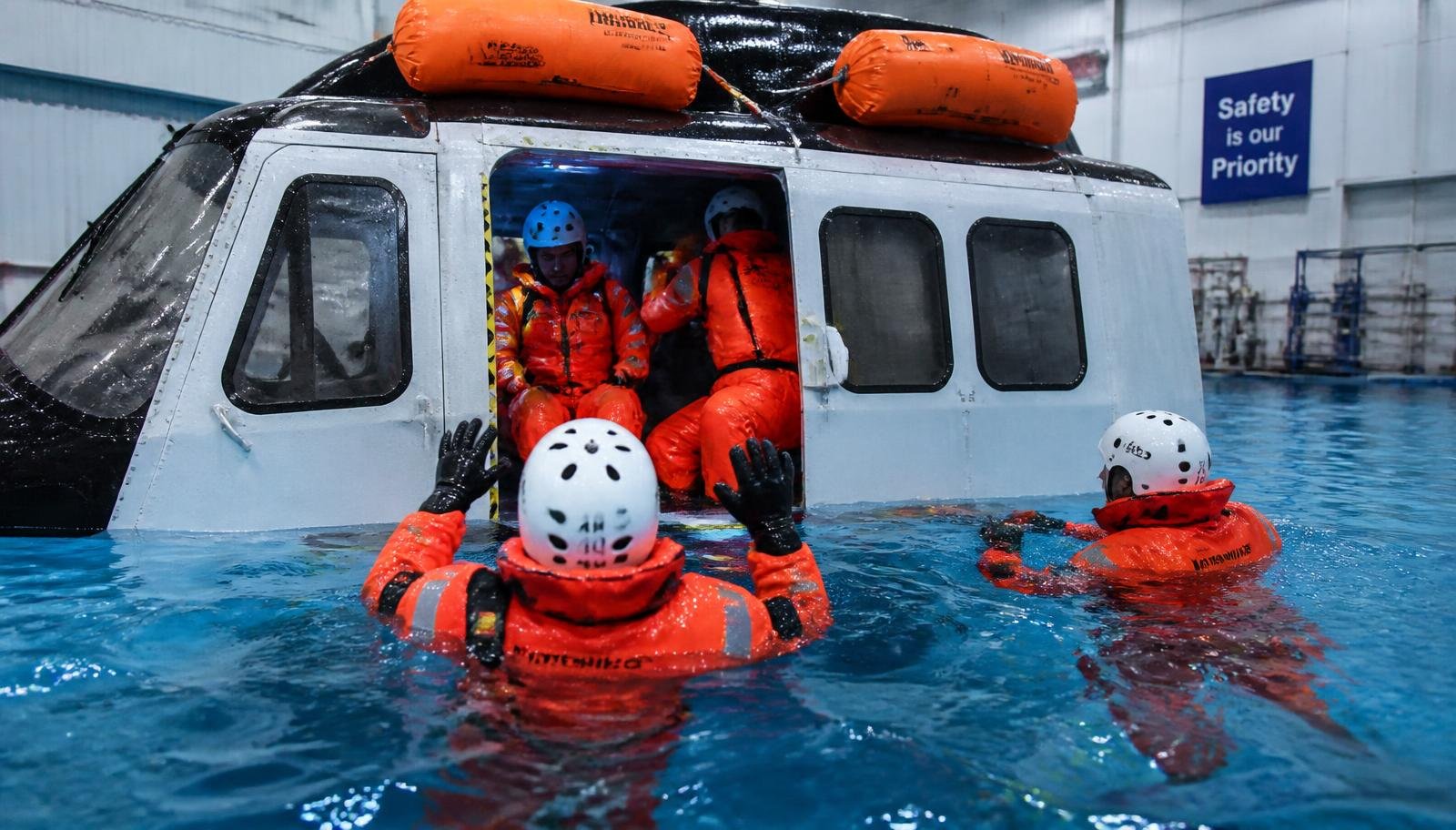
Recruiters will not read your CV if you do not have the tickets, so this is not the step to skip. For the UK sector, the non-negotiable starting kit is a BOSIET (Basic Offshore Safety Induction and Emergency Training) and a valid OGUK medical. Together they cost roughly £900 to £1,300 and take about a week between them.
- BOSIET (or FOET for renewals) covers helicopter escape, firefighting and sea survival. Delivered by OPITO-approved centres.
- OGUK medical confirms you are fit to work offshore. Only specific doctors can issue it.
- MIST is a short online course covering rig-specific hazards, often required by UK operators.
- CA-EBS is a category A emergency breathing system add-on that most operators now expect alongside BOSIET.
For wind, replace BOSIET with a GWO Basic Safety Training package and register on WINDA. For deep-sea or merchant marine work, you need STCW basic safety and an ENG1 medical instead.
These are investments, not sunk costs. Every serious offshore employer expects a candidate to have paid for them before applying. Turning up without them signals you are not really committed.
Step 2: Write a CV that speaks offshore
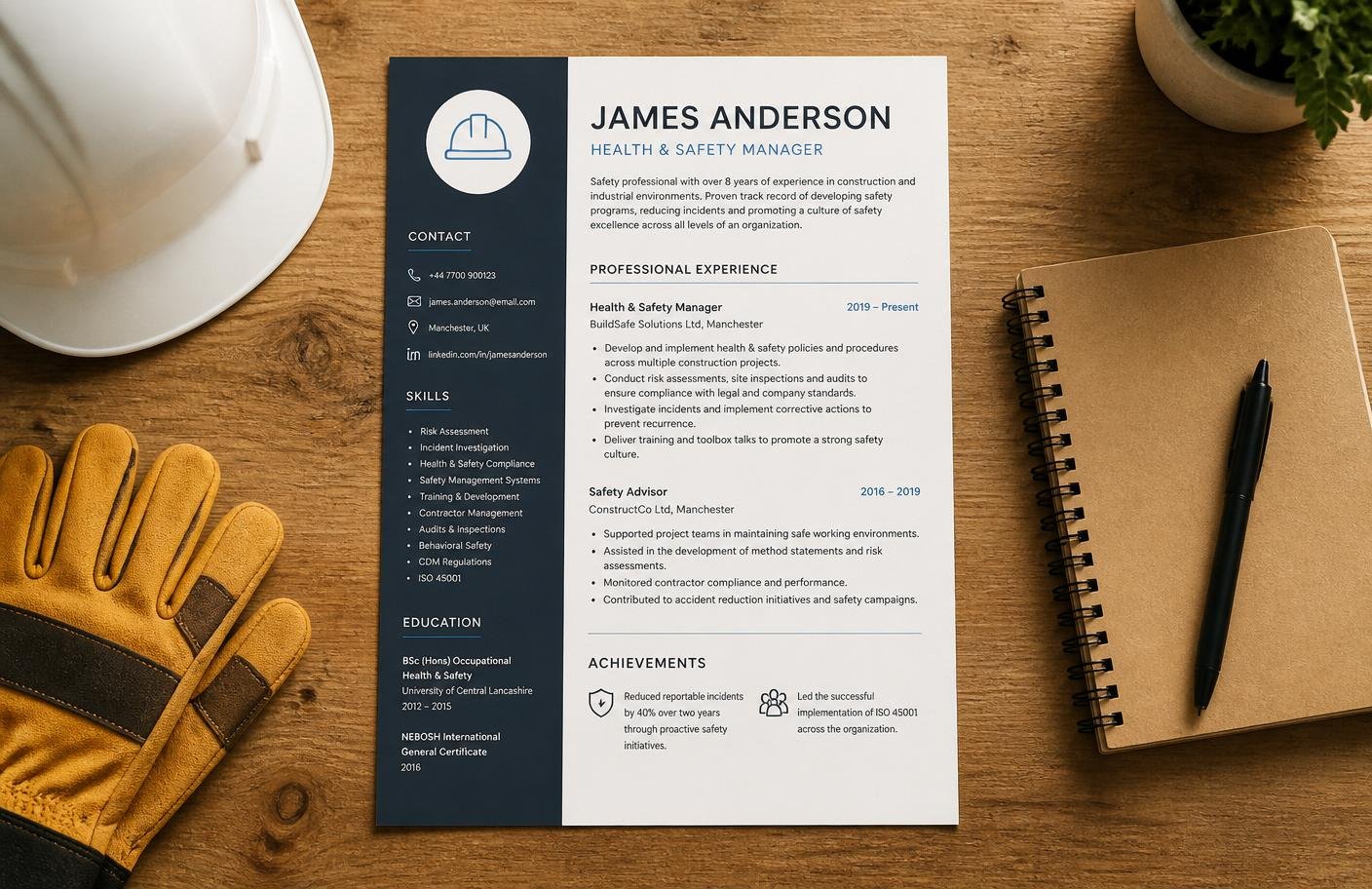
This is where most candidates lose the job before they ever make it to interview. An offshore CV is not the same document you would send to a shore-based employer. It has its own layout, its own vocabulary, and its own priorities.
What a good offshore CV does in the first ten seconds:
- Names the role you are targeting in the top line, not a vague summary.
- Lists your certificates, expiry dates and ticket numbers before any employment history.
- Uses the language recruiters search for: BOSIET, OGUK, MIST, permit to work, lifting operations, LOLER, PTW, toolbox talks.
- Quantifies rotations, day-rates handled, POB numbers, uptime figures, incidents avoided.
- Fits on two pages, cleanly formatted, in a font an ATS can actually read.
If your background is not offshore yet, the job of the CV is translation. A scaffolder from a construction site is not a different person from a scaffolder on a jacket, but the way you describe the work needs to match how offshore hiring managers think. That is the single biggest reason people with the right skills still get filtered out.
If you want an honest second opinion before you start applying, our £25 DIY CV Review and ATS Scan runs your existing CV through the same checks a recruiter's software uses and comes back with a plain-English list of what to change.
Step 3: Apply through the right channels

In the UK, the first offshore job almost never comes directly from a major operator. It comes from an agency or a service company that supplies crew to those operators. Trying to apply straight to Shell or Equinor as a first-timer is the single most common mistake we see.
Where to focus your energy:
- Specialist offshore agencies, including Petrofac, Bilfinger Salamis, Sparrows Group, OEG Renewables, Aker Solutions, Wood, Semco Maritime and Global Wind Service.
- OGUK members list, which is a directory of the actual companies doing work in the UKCS. Work through it methodically.
- Vessel operators for marine and DP roles, including Boskalis, Solstad, DOF, Subsea 7 and Van Oord.
- LinkedIn, followed by a polite direct message to the person whose name appears on the advert. This works far more often than people believe.
- Word of mouth. Once you have your first rotation, keep in touch with the people you worked with. Offshore hiring is a small world.
How much can you actually earn?
| Role level | Typical UK annual pay | Rotation |
|---|---|---|
| Entry (roustabout, steward, catering) | £30k to £45k | 2 on / 3 off |
| Skilled trade (scaffolder, welder, rigger) | £50k to £70k | 2 on / 2 off or 2 on / 3 off |
| Technician (mechanical, electrical, instrument) | £55k to £85k | 2 on / 3 off |
| Supervisor / specialist | £90k to £140k+ | Even time or 3 on / 3 off |
Ranges based on 2025 to 2026 UK North Sea day rates and industry salary surveys. Offshore pay is usually calculated as a day rate multiplied by days worked, not a flat annual figure.
Do you need a degree?
For the vast majority of offshore roles, no. What you need is a recognised trade qualification, current safety tickets and a valid medical. Degrees are only required for a narrow band of positions: petroleum engineers, geoscientists, subsea specialists and some HSE leadership roles.
How long will it realistically take?
A candidate who is already ticket-ready, has a properly written offshore CV and applies consistently through the right channels can usually secure a first rotation within three to six months. Without those three ingredients, the same candidate can spend a year applying and hear almost nothing back. The difference is almost never talent. It is preparation.
The 8-week action plan
- Weeks 1 to 2. Book BOSIET, MIST, CA-EBS and your OGUK medical for the earliest available dates. Do not wait for anything else before booking these.
- Weeks 3 to 4. Rebuild your CV in oil rig CV format. Get a second opinion from someone who hires offshore, or use our offshore CV writing service and compare CV packages and prices.
- Week 5. Register with the specialist agencies listed above. Create a full LinkedIn profile with your certificates and rotations.
- Weeks 6 to 8. Apply to at least ten roles a week. Follow up every application after five working days with a short, polite message.
Common questions
How do I get a job offshore with no experience?
Get the tickets, get a proper offshore CV, and apply for entry roles rather than specialist ones. Steward, catering assistant, roustabout and scaffolder mate are the most realistic first jobs.
Can I get an offshore job in Scotland if I live elsewhere in the UK?
Yes. Most operators fly crew to Aberdeen, Sumburgh or Scatsta and pay travel from your home base. Where you live has very little effect on your chances.
Is FIFO offshore work worth it?
For most people, the rotations pay for a lifestyle that would be hard to fund onshore. The trade-off is time away from family. If that trade-off works for you, offshore is one of the most rewarding careers open to skilled workers today.
Ready to put yourself in front of offshore recruiters?
Our team writes offshore CVs full-time. If you want a professionally written, ATS-optimised CV that speaks the language recruiters are searching for, we can help.
Related guides
Day rates, CompEx and HV tickets, FIFO rotations and how onshore sparks move offshore.
Read guidePay, qualifications and how paramedics, nurses and military medics get hired.
Read guideReal North Sea day rates and annual pay for every offshore role.
Read guideEntry-level routes and how to rewrite a non-offshore CV.
Read guideAberdeen operators, agencies and where to look in 2026.
Read guideHow UK fly-in fly-out rotations really work.
Read guideBOSIET, MIST, FOET and CA-EBS costs, validity and where to train.
Read guideCost, the three day course content, HUET and where to book in the UK.
Read guide