Offshore Certifications UK 2026: BOSIET, MIST, FOET and CA-EBS Costs Explained
11 min read · Updated August 2026
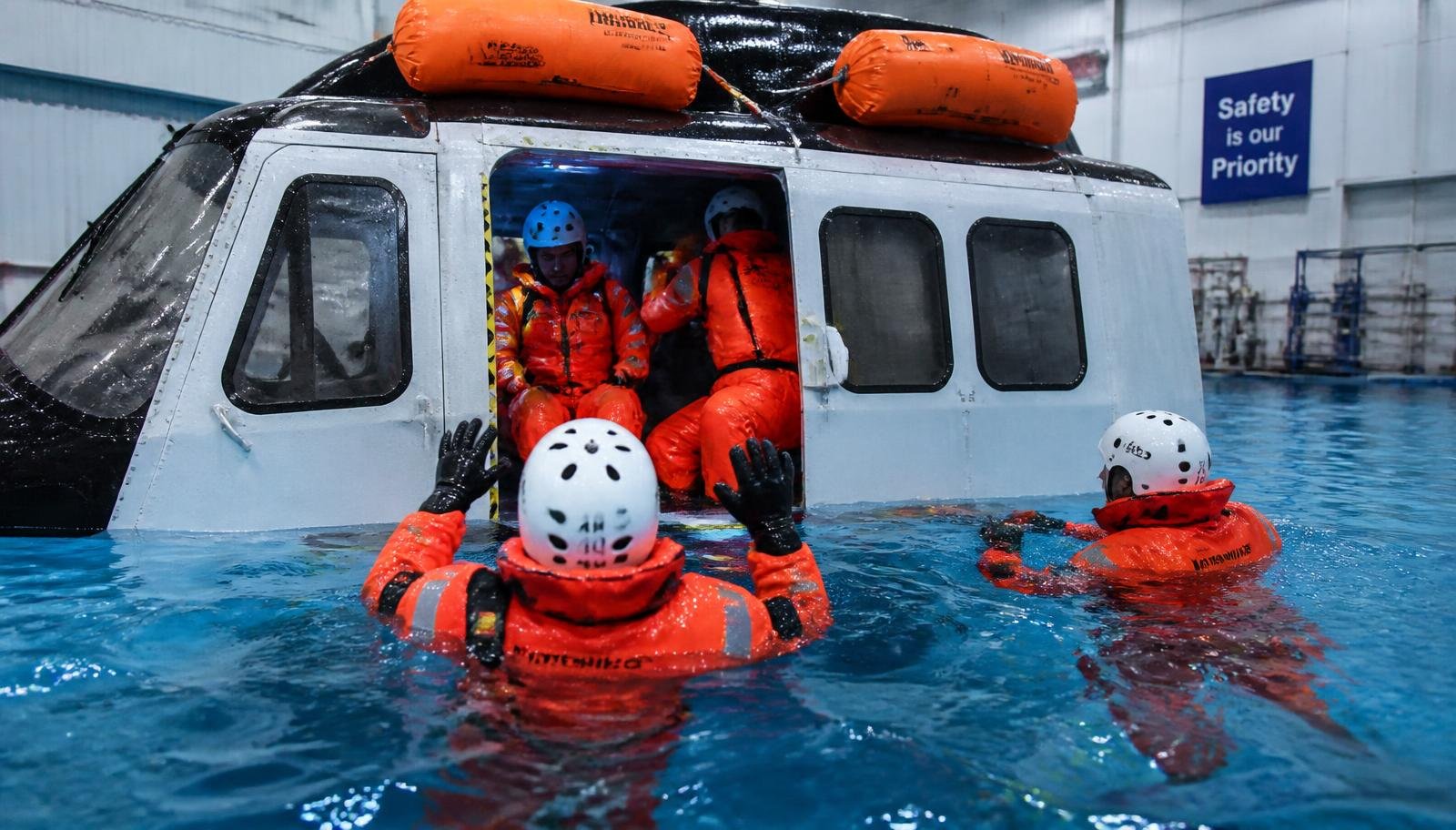
Offshore training is the first real cost of an offshore career, and it is where most people get bad advice. Somebody on a forum tells you that you need six courses. A training centre sells you a bundle. An agency says come back when you are ticketed. This guide sets out exactly which certificates UK employers ask for in 2026, what each one costs, how long it lasts and the order to book them in so you do not waste money.
To work offshore in UK oil and gas in 2026 you need three certificates: an OGUK medical (£90 to £150), BOSIET with CA-EBS (£900 to £1,400, valid 4 years) and MIST (£200 to £350, valid 4 years). Budget roughly £1,300 to £1,800 all in. Offshore wind uses GWO Basic Safety Training (£1,100 to £1,500, valid 2 years) instead of BOSIET.
The three certificates you actually need
For UK oil and gas there is a short list. Everything else is either a renewal of one of these or a trade ticket tied to your specific job.
- An OGUK medical. A half day check with an approved doctor. Without a valid one you cannot step on a helicopter, full stop.
- BOSIET with CA-EBS. Three days of helicopter escape, sea survival, firefighting and first aid. This is the one people remember for the rest of their lives.
- MIST. One day covering the UK offshore safety regime, permits to work and your right to stop the job. It is logged on Vantage, which operators check before you mobilise.
If you are heading to offshore wind rather than oil and gas, swap BOSIET and MIST for GWO Basic Safety Training. If you will be crewing a vessel or CTV, you will need STCW Basic Safety Training instead.
Core offshore safety certificates, 2026 UK prices
| Certificate | Who needs it | Length | Cost | Valid |
|---|---|---|---|---|
| OGUK / ENG1 medical | Everyone | Half day | £90 to £150 | 2 years |
| BOSIET with CA-EBS | Oil & gas, helicopter travel | 3 days | £900 to £1,400 | 4 years |
| MIST | Everyone on a UKCS installation | 1 day | £200 to £350 | 4 years |
| FOET (renewal of BOSIET) | Anyone renewing | 1 day | £450 to £650 | 4 years |
| GWO Basic Safety Training | Offshore wind technicians | 5 days | £1,100 to £1,500 | 2 years |
| STCW Basic Safety Training | Vessel and CTV crew | 5 days | £700 to £950 | 5 years |
Prices vary by centre and by how busy the North Sea is that month. Aberdeen, Great Yarmouth and Newcastle are usually the cheapest because there is real competition between centres. One-off bookings in peak season cost more than a corporate block booking, which is part of why some people wait for employer sponsorship.
BOSIET and CA-EBS, in plain English
BOSIET stands for Basic Offshore Safety Induction and Emergency Training. Over three days you learn how to escape a helicopter that has ditched and inverted underwater, how to survive in the water and get into a life raft, how to fight a small fire and get out of a smoke-filled space, and basic first aid. The helicopter underwater escape trainer, the HUET, is the part everybody talks about. You are strapped into a mock cabin, lowered into a pool and turned upside down, and you have to find the window and get out.
It is uncomfortable, not dangerous. Instructors are divers, the pool is warm, and the course is built to take people who are nervous and get them through it. If you cannot swim 50 metres unaided, sort that out before you book.
CA-EBS is the compressed air emergency breathing system, now required by almost every North Sea operator. It is a small rebreather you deploy during a ditching so you have air while you escape. It is bolted onto BOSIET and FOET as a half-day module. Book BOSIET with CA-EBS from the start. Doing it separately later costs you an extra day and an extra £250 to £400. Full breakdowns of both sit on our BOSIET page and CA-EBS page.
Renewal: BOSIET lasts four years. You renew with FOET, one day, £450 to £650. Let it lapse past the grace period and you sit the full three days and pay full price again. Diary it the week you pass.
MIST and your medical
MIST is the one people underestimate. It is a single day and it is not physically demanding, but it is mandatory for every person on a UKCS installation and it is checked. You can sit it in a classroom or online as eMIST, and it is valid four years.
The OGUK medical is a half day with an approved doctor: history, blood pressure, BMI, vision, hearing and urine analysis. Valid two years. Two honest warnings. First, high blood pressure and BMI are the two most common reasons people get a conditional pass or a referral, and both take weeks to fix, so do not book it the day before a job starts. Second, do not hide medication or a past condition. It gets found and it ends careers.
Spent £1,500 on tickets? Do not lose the job on a two page CV.
Agencies screen on certificates before anything else, and most CVs bury them on page two where the filter never sees them. Our £25 CV review tells you exactly what is wrong with yours in 48 hours.
Get a £25 CV reviewOffshore wind: GWO instead of BOSIET
Offshore wind runs a separate standard. GWO Basic Safety Training is five days covering working at height, manual handling, fire awareness, first aid and sea survival. It costs £1,100 to £1,500 and is valid only two years, refreshed with a three day BSTR.
Two things trip people up. GWO does not get you onto an oil and gas platform, and BOSIET does not get you up a turbine, so people who work both sectors carry both. And the two year validity means wind certificates lapse much faster than oil and gas ones, which is why so many wind CVs quietly show expired tickets. If you are targeting wind, our offshore wind CV guide and wind turbine technician CV service show how OEM recruiters expect GWO modules to be listed.
Trade tickets that actually raise your day rate
Safety certificates get you offshore. Trade tickets decide what you are paid once you are there. These are the ones that move the number most.
Role specific offshore certifications and 2026 costs
| Certificate | Who needs it | Length | Cost | Valid |
|---|---|---|---|---|
| IWCF Well Control | Drillers, assistant drillers | 5 days | £1,200 to £2,000 | 2 years |
| 18th Edition + HV AP | Electrical technicians | 3 to 5 days | £600 to £1,600 | 3 to 5 years |
| IRATA Level 1 | Rope access technicians | 5 days | £900 to £1,200 | 3 years |
| OPITO Rigging Stage 3 | Riggers, deck crew | 5 days | £1,200 to £1,600 | 2 years |
| CISRS Offshore Scaffolder | Scaffolders | Varies | £1,000 to £2,500 | 5 years |
| HSE Offshore Medic | Offshore medics | 4 weeks | £4,000 to £6,000 | 3 years |
If you are weighing up whether a ticket pays for itself, compare it against the day rates in our 2026 oil rig salary guide. An IRATA Level 1 at £1,000 typically pays itself back inside a single hitch. HV AP for an electrician is usually worth £60 to £100 a day for the rest of your career.
Where to train in the UK
OPITO accredited centres cluster around the offshore hubs: Aberdeen and Montrose for the central and northern North Sea, Newcastle and Great Yarmouth for the southern sector, and Teesside and the Humber for the wind corridor. GWO centres are spread wider, including Grimsby, Hull, Barrow and Lowestoft. STCW runs out of Southampton, Plymouth, Glasgow and Fleetwood.
Three practical tips. Book direct with the centre rather than a reseller, because resellers add 10 to 20 percent for the same seat. Ask about cancellation slots, since centres often discount a seat that frees up in the next fortnight. And check the certificate is genuinely OPITO or GWO accredited, not an in-house lookalike, because a non-accredited certificate is worth nothing on Vantage. Every course we cover is broken down on our offshore training hub.
The order to book them in
- Medical first. £90 to £150. If you fail or get a conditional pass, you have saved yourself £1,300 on courses you could not use.
- MIST next. One day, cheap, and it shows an agency you are serious while you save for BOSIET.
- BOSIET with CA-EBS. The big one. Book it with CA-EBS included.
- Then your trade ticket, chosen around the roles you are actually applying for, not the ones the training centre is promoting this month.
- Then fix your CV, before you send a single application.
That last step is the one people skip, and it is the cheapest step of the lot. If you want the full route from zero to first rotation, read how to get a job offshore and offshore jobs with no experience.
How to put certificates on your CV so agencies see them
Recruiters and their software look for one thing before your work history: a clean certificate matrix with expiry dates. Put it in the top third of page one, list each certificate by its recognised name (BOSIET, CA-EBS, MIST, OGUK, GWO BST, not "offshore safety course"), and add the expiry date next to each one. Anything expired should either be removed or marked with a booked renewal date. A single line saying "available to mobilise immediately, all tickets in date" gets more callbacks than a paragraph of personal statement.
That is exactly what our offshore CV writing service builds, and you can see the layout in the offshore CV example.
Offshore certification questions people actually ask
What certificates do I need to work offshore in the UK?
For UK oil and gas you need three things before you can mobilise: a valid OGUK (Energy Institute) medical, BOSIET with CA-EBS, and MIST. For offshore wind you need GWO Basic Safety Training plus a medical. Everything else is role specific.
How much does BOSIET cost in the UK in 2026?
BOSIET with CA-EBS costs roughly £900 to £1,400 depending on the centre. Aberdeen and Great Yarmouth sit at the lower end, one-off bookings at busy centres at the higher end. MIST adds £200 to £350 and an OGUK medical £90 to £150.
How long is BOSIET valid for?
Four years. After that you renew with FOET (Further Offshore Emergency Training), a one day course that costs around £450 to £650. If your BOSIET has expired by more than the grace period you have to sit the full three day course again.
Do I need BOSIET before applying for offshore jobs?
Not always. Some operators and agencies will sponsor training for the right candidate, especially for trades in short supply. But holding valid BOSIET, MIST and a medical moves you to the top of the pile because you can mobilise immediately with no cost to the employer.
What is the difference between BOSIET and GWO?
BOSIET is the OPITO standard for oil and gas installations reached by helicopter. GWO Basic Safety Training is the offshore wind standard and includes working at height and turbine rescue. They are not interchangeable, though sea survival elements overlap.
Can I get an offshore job with no certificates at all?
Rarely offshore itself, but yes onshore in a feeder role such as fabrication yards, quaysides or CTV shore support. Most people fund BOSIET, MIST and a medical themselves, which is about £1,300 to £1,800 all in, then apply as a fully ticketed first tripper.
Tickets in hand? Get a CV that puts them in front of the recruiter.
- Certificates matrix recruiters can scan in seconds
- ATS keywords for North Sea and wind agencies
- 48 hour turnaround, unlimited revisions
Related guides
Real North Sea day rates and annual pay for every offshore role.
Read guideCertifications, CV, agencies and an 8-week action plan.
Read guideEntry-level routes and how to rewrite a non-offshore CV.
Read guideAberdeen operators, agencies and where to look in 2026.
Read guideHow UK fly-in fly-out rotations really work.
Read guideCost, the three day course content, HUET and where to book in the UK.
Read guide