BOSIET training UK 2026: cost, course content and where to book
Everything a first tripper needs to know about the OPITO Basic Offshore Safety Induction and Emergency Training: the real price, what happens on each of the three days, and how to turn the certificate into interviews.
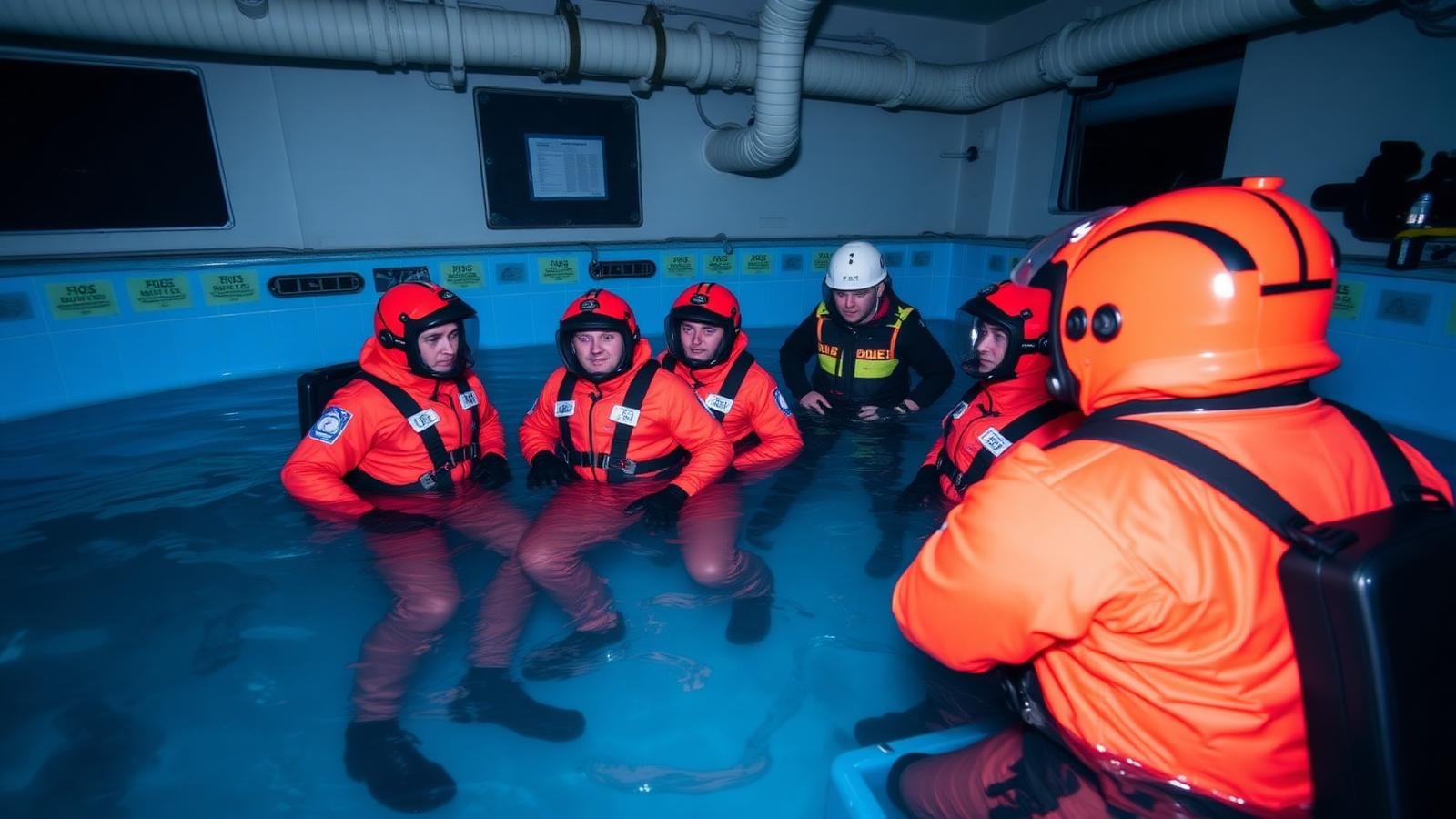
BOSIET training in the UK costs £900 to £1,400 in 2026, takes three days and is valid for four years. It covers offshore safety induction, firefighting, sea survival and helicopter underwater escape with CA-EBS. You need a valid OGUK medical (£90 to £150) before you attend, and most employers also require MIST (£200 to £350). Budget £1,300 to £1,800 to be fully ticketed as a first tripper.
BOSIET cost in 2026
BOSIET with CA-EBS runs at £900 to £1,400 across UK OPITO centres in 2026. The spread is mostly geography and demand: Aberdeen, Montrose and Great Yarmouth have the most seats and therefore the keenest prices, while one-off bookings at a centre running at capacity sit at the top of the range. Book direct with the training provider rather than through a reseller, because resellers add 10 to 20 percent for exactly the same seat.
| Course | Length | UK cost 2026 | Valid |
|---|---|---|---|
| BOSIET with CA-EBS | 3 days | £900 to £1,400 | 4 years |
| BOSIET without CA-EBS (rare in UK) | 3 days | £800 to £1,100 | 4 years |
| FOET refresher | 1 day | £450 to £650 | 4 years |
| MIST | 1 day | £200 to £350 | 4 years |
| OGUK medical | Half day | £90 to £150 | 2 years |
| Full first tripper package | About 5 days | £1,300 to £1,800 | — |
The number that matters is not BOSIET on its own but the full first tripper package. Between the medical, MIST and BOSIET you are looking at £1,300 to £1,800 before you have applied for anything. Our 2026 offshore certifications guide breaks down every other ticket by role, cost and validity.
What BOSIET actually covers, day by day
BOSIET is the OPITO standard entry course for anyone travelling to a UK offshore installation by helicopter. It is three consecutive days and it is practical, not academic.
- Day one, safety induction. Offshore hazards, the permit to work system, control of substances, manual handling, how installations are laid out and what the alarms mean. Classroom based with group exercises.
- Day two, firefighting and self rescue. Extinguisher types and use, small fire attack, smoke filled compartment escape wearing a smoke hood, and casualty handling. Physical but manageable.
- Day three, sea survival and HUET. Lifejackets, liferaft entry and righting, group survival techniques in the water, then the helicopter underwater escape module with Compressed Air Emergency Breathing System.
You are assessed continuously on participation and competence rather than by written exam. Most people pass. The certificate arrives on OPITO's Vantage system, which is what operators check, so make sure your name and date of birth on the booking match your passport exactly.
HUET and CA-EBS: what to expect in the pool
HUET is the part everyone worries about, and the worry is almost always worse than the exercise. You sit in a helicopter simulator that is lowered into a pool, and you escape through a window. It is built up in stages: first a simple lowering with no rotation, then partial submersion, then a full inversion. Rescue divers are in the water at every stage and an instructor talks you through each step before it happens.
CA-EBS is the small compressed air cylinder now standard on UK flights. You are taught to deploy it, clear it and breathe from it while inverted, which is why UK BOSIET is three days rather than two. If you are a nervous swimmer or claustrophobic, tell the instructor on day one rather than the moment before the module. They run people through slowly all the time and it is far better than failing the exercise in silence.
Practical tips from candidates who have just done it: eat a light breakfast, take swimwear and a towel, contact lens wearers should bring glasses as a backup, and if you have any ear or sinus congestion, move the course rather than push through it.
About to spend £1,400 on BOSIET? Spend £25 on the CV first.
Agencies filter on certificates before they read a word of your history, and most CVs hide them on page two where the software never finds them. A specialist with 25+ years in offshore recruitment reads your CV, runs the ATS scan and sends the fixes back within 48 hours.
Get a £25 CV reviewWhere to book BOSIET in the UK
OPITO accredited centres cluster around the offshore hubs. Aberdeen and Montrose serve the central and northern North Sea and have the highest course frequency, so they are your best bet for a place inside two weeks. Newcastle and Great Yarmouth cover the southern sector, and Teesside and the Humber sit in the middle of the wind corridor if you are working both sectors.
Three things to check before you pay. Confirm the course is genuinely OPITO accredited and appears on Vantage, because in-house lookalike certificates are worth nothing to an operator. Confirm CA-EBS is included, since a BOSIET without it will not get you on a UK flight. And ask about cancellation seats, because centres often discount a place that frees up in the next fortnight. Every course is broken down by cost and validity on our offshore training hub.
The medical you need before you attend
You cannot sit BOSIET without a valid OGUK (Energy Institute) medical or equivalent fitness certificate. It is a half day with an approved doctor covering history, blood pressure, BMI, vision, hearing and urinalysis, and it costs £90 to £150 and lasts two years.
Book the medical first. Blood pressure and BMI are the two most common reasons for a conditional pass or referral, and both take weeks to resolve. Failing a medical after you have paid £1,400 for a course is a painful and entirely avoidable mistake. Never hide medication or a past condition either, because it gets found and it ends careers.
Renewing with FOET
BOSIET lasts four years. Renewal is FOET, Further Offshore Emergency Training, a single day at £450 to £650 covering the sea survival, HUET and firefighting refreshers. Book it before the expiry date, not after: if you lapse past the grace period you have to sit the full three day BOSIET again at nearly triple the cost.
Set a calendar reminder six months before expiry, and while you are at it, check your MIST date as well since both usually run on the same four year cycle.
Is BOSIET worth paying for yourself?
For most first trippers, yes. Agencies work to short mobilisation windows, and a candidate who is fully ticketed and available now beats a candidate who needs three weeks and £1,400 of sponsorship. Against a North Sea day rate of £180 to £400 depending on role, the whole ticket package pays back inside one or two hitches.
The exception is a trade in genuine short supply, where operators and larger agencies do still sponsor. If you are in one of those trades it is worth applying first and asking the question before you spend. Either way, do not book the course and then send out a CV you have not touched in three years, which is where most of the money gets wasted.
Putting BOSIET on your CV so agencies actually see it
Recruiters and their applicant tracking systems look for a certificate matrix before they read anything else. Put it in the top third of page one. Name each ticket exactly as issued, BOSIET, CA-EBS, MIST, OGUK medical, not "offshore safety course", and put the expiry date next to each. Add one line saying you are available to mobilise immediately with all tickets in date. That single line generates more callbacks than any personal statement.
If you want the layout copied straight off a CV that works, see our offshore CV example, or have it built for you with our offshore CV writing service. Not sure where you stand? Start with the free ATS checklist, then the £25 review if more than a few items fail.
BOSIET questions people actually ask
How much does BOSIET training cost in the UK in 2026?
BOSIET with CA-EBS costs roughly £900 to £1,400 in the UK. Aberdeen, Montrose and Great Yarmouth centres sit at the lower end, while short notice bookings at busy centres reach the upper end. Add an OGUK medical at £90 to £150, which you need before you can attend.
How long does BOSIET take?
Three days. Day one is safety induction and offshore hazard awareness, day two is firefighting and self rescue, and day three is sea survival plus the helicopter underwater escape training with CA-EBS.
How long is BOSIET valid for?
Four years. You renew with FOET, a one day course costing about £450 to £650. If your BOSIET lapses past the grace period you must sit the full three day course again.
Do I need a medical before BOSIET?
Yes. UK OPITO centres require a valid OGUK (Energy Institute) medical, or an equivalent fitness certificate, before you can take part in the pool and HUET elements. Book the medical first so you do not lose a course fee.
Is BOSIET hard to pass?
It is assessed on participation rather than fitness tests, and most people pass. The HUET module is the part people worry about, but it is done in stages with divers in the water and instructors talking you through each escape. If you are a nervous swimmer, tell the instructor on day one.
Will an employer pay for my BOSIET?
Sometimes. Operators and larger agencies will sponsor training for trades in short supply or for candidates already offered a start date. Most first trippers self fund BOSIET, MIST and a medical, which is around £1,300 to £1,800 all in, because being fully ticketed means you can mobilise immediately.
What is the difference between BOSIET, FOET and HUET?
BOSIET is the full three day OPITO entry course. HUET is the helicopter underwater escape module inside it. FOET is the one day refresher you take every four years to keep BOSIET current.
Does BOSIET guarantee an offshore job?
No. It removes the biggest barrier to being shortlisted, but agencies still screen on CV quality first. Certificates buried on page two of a badly formatted CV are missed by applicant tracking systems, which is why ticketed candidates still get no replies.
Tickets booked? Make sure the CV gets them in front of a recruiter.
- Certificate matrix recruiters can scan in seconds
- ATS keywords used by North Sea agencies
- 48 hour turnaround, unlimited revisions
Related guides
Day rates, CompEx and HV tickets, FIFO rotations and how onshore sparks move offshore.
Read guidePay, qualifications and how paramedics, nurses and military medics get hired.
Read guideReal North Sea day rates and annual pay for every offshore role.
Read guideCertifications, CV, agencies and an 8-week action plan.
Read guideEntry-level routes and how to rewrite a non-offshore CV.
Read guideAberdeen operators, agencies and where to look in 2026.
Read guideHow UK fly-in fly-out rotations really work.
Read guideCost, the three day course content, HUET and where to book in the UK.
Read guide